
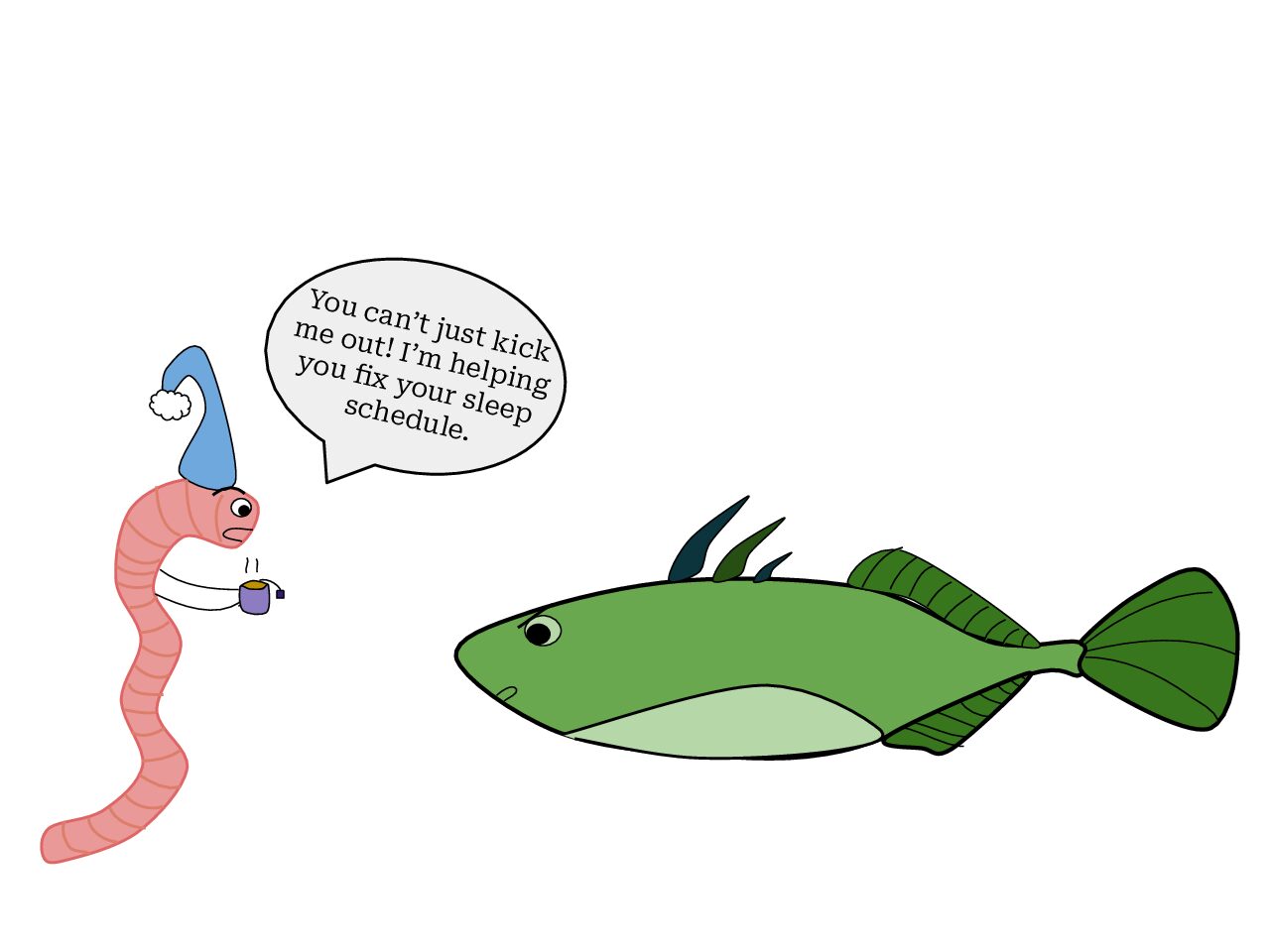
Have you ever felt as though you could sleep through an entire day? Maybe you exhausted your energy during a soccer game or stayed up late watching a movie the night before. In three-spined stickleback fish, however, an abundance of afternoon naps might be caused by an unwanted visitor: a parasitic tapeworm.
When a stickleback is infected with a tapeworm, the creature drains energy and resources from the fish’s body. Imagine your younger sibling starts stealing your snacks, chasing you around, and making you entertain them all day. You would get tired and cranky pretty quickly, right?
For sticklebacks that have consumed tapeworms, this unwanted companion is a daily reality. Not only do parasites feed themselves by stealing the food from their host, the host also becomes exhausted because its body is trying to fight off the threat — similarly to how you may feel run-down and tired while fighting off a cold.
Because of the resources the parasite steals from the tapeworm, the fish spends more time in a sleep-like state. Researchers studying sleep-like behavior in these fish found that a month after being infected with the parasite, the probability that an infected fish was engaging in sleep-like behavior at a given time during the night was 30% higher than non-infected fish (Bauhus et al., 2024).
Beyond sleeping for longer durations, infected fish also went more time without interruptions to their sleep. When they rested, they would typically sleep for about 10 minutes longer than uninfected fish between periods of restlessness (Bauhus et al., 2024).
While more sleep might sound like a good thing for the host fish, the greater time spent in deep sleep might have a sneaky benefit for the parasites. When a fish is in a deeper, longer sleep, it is less aware of its surroundings and more vulnerable to predators. If the parasite’s stickleback host is eaten, it allows the tapeworm to infect a larger, more resource-rich predator.
The next time you can’t seem to get out of bed, there’s no need for concern — you’re likely just a little run-down. But for stickleback fish, the culprit might be a much more sinister, unwanted guest.
References:
Bauhus, M. B., Mews, S., Kurtz, J., Brinker, A., Peu, R., & Anaya-Rojas, J. M. (2024). Tapeworm infection affects sleep-like
behavior in three-spined sticklebacks. Scientific Reports, 14(1), 23395.
