
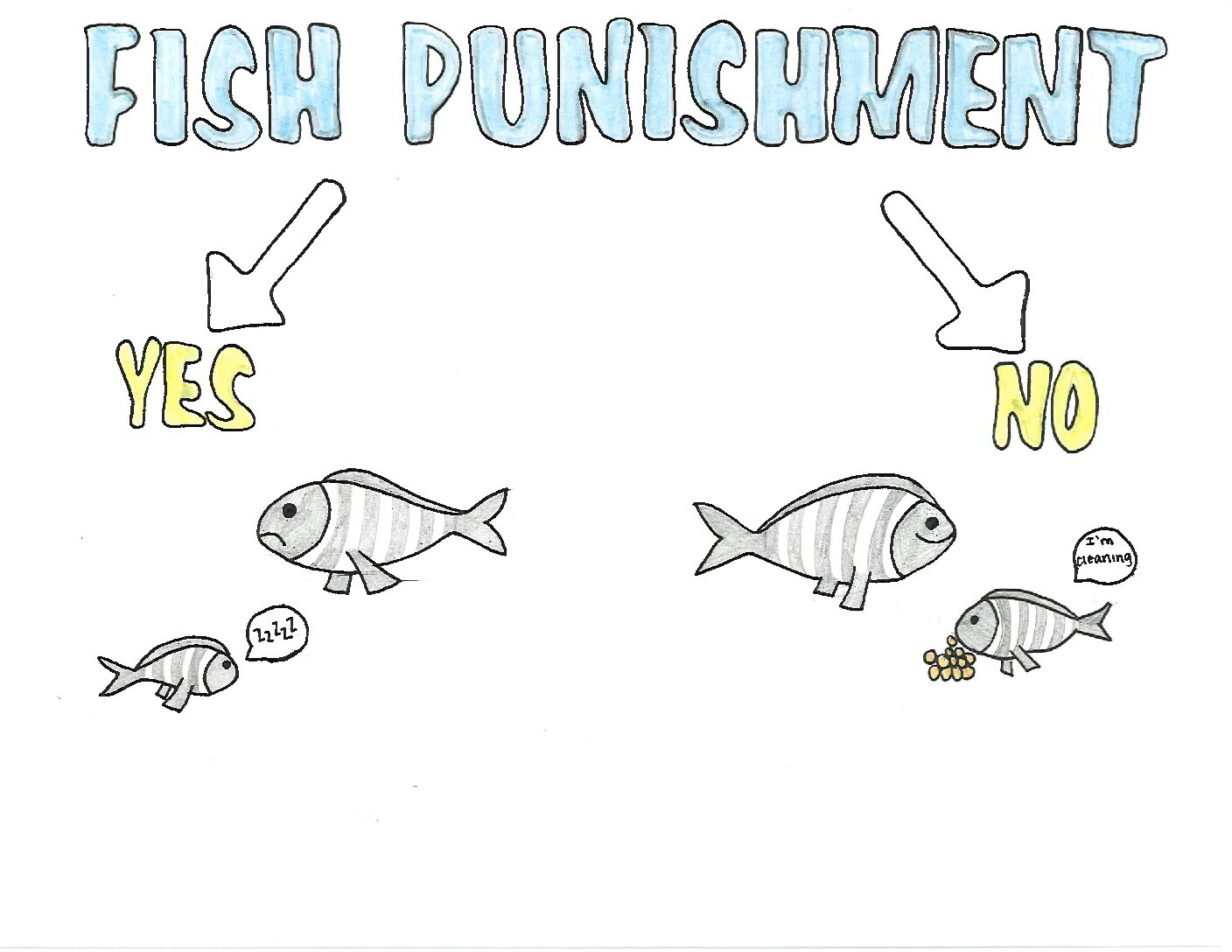
Do you ever complain when your parents ask you to clean or do chores? If so, you are not the only one! Interestingly enough, a type of fish called a cichlid (Neolamprologus savoryi) faces that same challenge and can even face “fish punishment” at times. Cichlids live in large groups like a family and have family dynamics like us. There are breeder fish, which are the parents, and helper fish, which are the kids. Like you, the helper fish have important jobs that help around the house, like defending the home, cleaning the nest, and caring for the eggs. These jobs are like chores that your parents may ask you to do, like cleaning your room. When the helper fish do their jobs, they get to stay safely in the group’s territory, almost like earning an allowance, but instead of money, they get a place to live. However, if the helper fish do not do their jobs, the breeder fish get mad and punish them.
In a recent study, scientists found that if the helper fish skips its job, the breeder fish elicits a form of punishment that informs the helper fish that it is in trouble and needs to do its job. The breeder fish indicate this by chasing, nipping, or even ramming into the helper fish that is not doing their jobs. This is like if your parents were to take something away, ground you, or yell at you for not doing your chores. With this form of fish punishment, the helper fish learn that doing their jobs keeps the peace, and the scientists in this study were even able to determine that the helper fish that get punished end up working even harder the next time. These helper fish end up learning the punishment they get for not doing what they should and try to avoid getting in trouble again. From seeing other helper fish get in trouble an idea called preemptive learning occurred. This is where the helper fish notices or thinks it might get punished, so it works extra hard before the breeder fish even has to punish them. This would be like knowing that your parents will get mad at your messy room, so you clean it.
In this cichlid family, the harder everyone works, the safer and more successful the group will become, so doing the jobs isn’t just to satisfy the breeder fish. If everyone works together, the group will flourish, allowing for better group fitness. This is part of why the punished helper fish don’t just swim away. They know that in their family, there is safety, better food, and possible future rewards like inheriting the territory or eventually becoming the breeder fish. This is why even though it can be complicated or annoying to keep the breeder fish happy, there are more benefits to staying and making the group happy. Like in your family, everyone has to do their part, so the next time your families ask you to do something, think about these fish.
Citation:
Hidaka, R., Sogawa, S., Kohda, M., & Awata, S. (2024). Punishment from dominant breeders increases helping effort of subordinates in a cooperatively breeding cichlid. Animal Behaviour, 211, 99-109.https://doi.org/10.1016/j.anbehav.2024.02.020
