
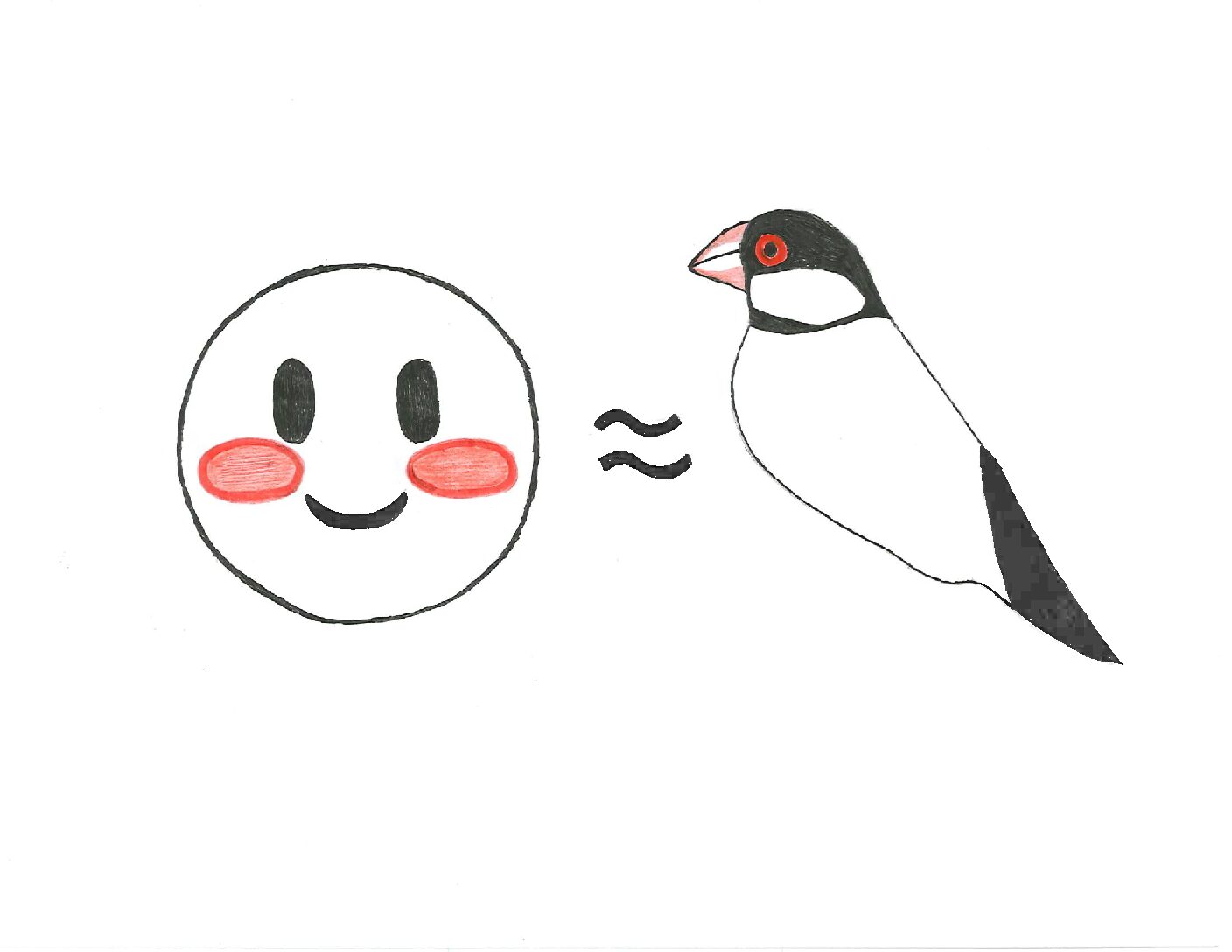
It’s often said that when someone blushes, it’s usually a sign of embarrassment, nervousness, or even attraction. Blushing is frequently seen as a social cue in humans, but have you ever wondered if other animals have their own ways of communicating like this? Surprisingly, Java sparrows do! These birds possess a unique social signal that functions similarly to human blushing. Imagine a bird with bright pink rings of skin around its eyes. While it might seem weird, these eye rings play a crucial role in communication, allowing Java sparrows to determine each other’s romantic relationship status at a glance. Although Java sparrows don’t “blush” like humans, their eye rings cue their readiness to breed and bond with a mate.
Java sparrow’s eye rings become more pronounced and change in color when the birds are pair-bonded. You might wonder how this physical change helps them in their lives, a question that recent research by Jenna Onaga and Masayo Soma (2023) looked at. The study found that Java sparrow’s eye rings play a crucial role in pair-bonding behavior, explicitly finding that these signals help them communicate emotional and physical states. Java sparrows are known for their monogamous relationships, meaning they stick with the same partner once bonded, and these eye rings help them to communicate with each other about the status of their breeding and pair bonding readiness.
Communication is crucial not only for humans and other animals but also for Java sparrows. Making sure you are on the same page as someone is always the most critical aspect of communication, and for these birds, the “page” is reproduction. Being a species that opportunistically breeds, communication through signals like eye rings can help to immediately let each other know who is available without causing unnecessary energy expenditure. Without obvious environmental cues like changing seasons to trigger mating, these birds need a way to ensure they’re in sync with each other regarding reproduction. The enlargement and coloration of these eye rings signal to their partner that they are ready to mate, helping to ensure that both birds are prepared to mate simultaneously and only with their pair bond. This form of communication is essential in species like Java sparrows because strong pair bonds are crucial for reproductive success, and the eye rings can help display that the relationship is still in sync.
Interestingly enough, it was found that the eye rings of pair-boned Java sparrows became more pronounced and thicker as time went on. This, however, was not seen in the birds that were not bonded or in relationships where bonds were not present. This finding proves further that the eye rings serve solely as a signal between mates, helping them to communicate their breeding readiness and the unavailability of others to bond with them. These eye rings are a form of nonverbal communication that allows the pairs to maintain their relationships, as humans use facial expressions and body language to express their feelings. The eye rings of this species are an example of how features and signals like this can have more significant implications for survival and reproductive success, and by studying this species, researchers learn more about how physical traits can evolve in response to social and environmental pressures.
Although this study focused on the role of eye rings in Java Sparrows, there is still so much to learn about animal communication and the mechanisms behind it. For now, though, the next time you see a bird, take a moment to think about the ways that it may be communicating. We may not be able to tell if a person is in love just by looking at their eyes, but Java sparrows can and it helps them keep their relationships strong.
Sources:
Onaga, J., & Soma, M. (2023). Eyes of love: Java sparrows increase eye ring conspicuousness when pair-bonded. Plos one, 18(10), e0292074. https://doi.org/10.1371/journal.pone.0292074
