
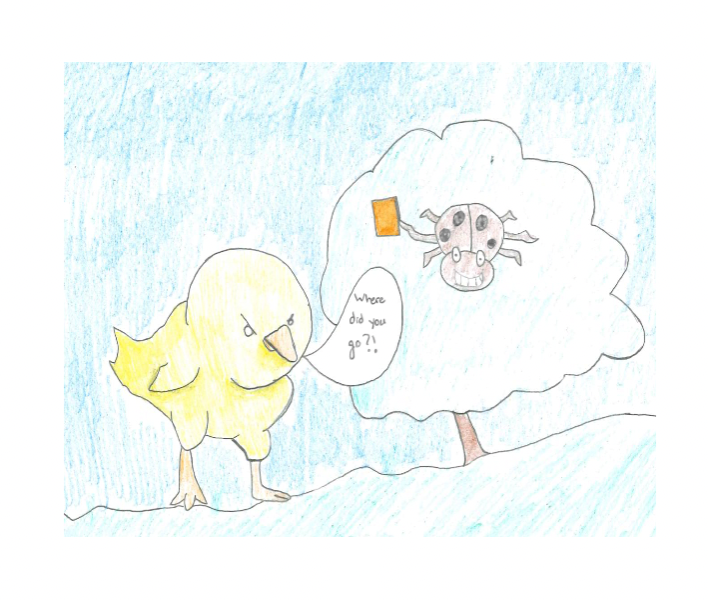
Being an animal in the wild must be really scary sometimes. Other creatures are always trying to chase you down and eat you! To survive for very long, a prey animal has to have some pretty good tricks up its sleeve. Some animals fight back, but others run away. Some are poisonous and bright red to warn away predators, while others are perfectly camouflaged to blend in with their surroundings. Other animals are camouflaged to blend in, but reveal bright spots when they jump up to run away. Lots of creatures including white tail deer do this tactic. Have you ever stumbled upon a deer in the woods? It was probably blended in with its surroundings, but then flashed a bright white tail when it ran away. This type of behavior is called flashing, and it has confused a lot of scientists.
If an animal is trying blend in, then why would it reveal bright spots when it tries to escape predators? Can that really help them get away? These are the questions that scientists asked when they conducted an experiment. They placed baby chicks in front of a computer screen. The computer screen showed dull blobs of color that looked a lot like bugs. When the chick noticed the tasty bug on the screen, it started to chase the image. The bug simulation would flash a bright orange color in response and move across the screen before going dull again. This is a simulation of flashing behavior. They also did tests where the prey never flashed orange, but just simply ran away. The scientists counted the number of times that the chick caught the bug image, and the number of times the chick gave up. By comparing these numbers across the two kinds of experiments, they can figure out the true effect of flashing behavior.
The bug escaped more times when it used flashing – so flashing works! For every 4 flashing bugs that were caught by the chick, 5 normal bugs were caught. The scientists have a theory about why this is the case, also. It has to do with search image. When a predator hunts their prey, they have some picture of the prey in their heads. This image is called the search image. If a prey creature displays a bright color every time they are chased, then this becomes the search image for that animal. Wthe prey item hides again, they confuse the predator because they no longer look like the search image. This causes the predator to give up, and the prey gets to live another day.
Works Cited
Seongsoo No, Hyeon-Mo Yang, Thomas N Sherratt, Changku Kang, Flash behaviors protect prey from avian predators, Behavioral Ecology, Volume 35, Issue 6, November/December 2024, arae076,
