
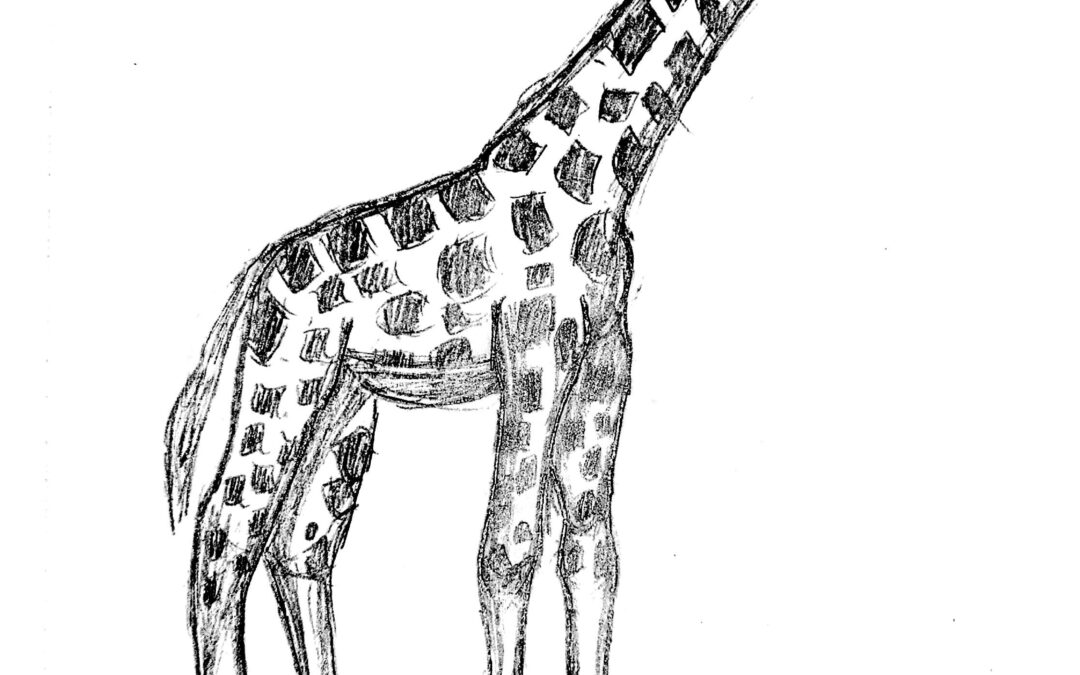
“Giraffes as Titans?!”
Many species have gone through “trial-and-error” versions of themselves in evolution. We have come to appreciate animals throughout many outlets (e.g., pets, zoos, veterans, and more), but we humans still sometimes tilt our heads and wonder – “Why do they look like that?” Whether it be the humanoid-looking golden doodles or silly tails on multiple bird species, we cannot help but wonder how this became the version of the animal we see. This article will focus on how giraffes got their long necks.
The long neck of a giraffe has been a puzzle for many years due to the costs outweighing the benefits of this feature. A giraffe needs to pump blood two meters up to the head, which requires high regulation within the body to avoid complications. The most popular theory taught in schools is that giraffes with long necks had access to more resources (those with longer necks could reach food from higher trees). Another theory is these long necks evolved due to sexual competition, with longer necks being more attractive for mates and engaging in male-to-male combat through neck swinging.
An unknown giraffe relative was discovered back in 1996, in northern China. Paleontologists have since found more than 77 fossils from the same species. The body structure led scientists to believe these fossils were more related to short-necked African Okapi. Due to the complexity of the bone structure found, paleontologists (those who study bones) speculate that the thick head structure was exclusively adapted for power, specifically in male-male combat. Though this could be evidence that longer necks evolved to adapt to dynamic fighting styles, other scientists are not convinced headbutting ruminants can correlate to neck length. There is an agreement that sexual selection has played an important role in the neck shape of previous giraffes throughout history and our modern-day giraffe. This can hopefully convince people to take the theories of sexual selection seriously, as they do naturally (and artificially) affect animals outside of our vicinity and the animals we see every day.
Sources Referenced:
- Nicola Jones (2022) How the giraffe got its neck: ‘unicorn’ fossil could shed light on puzzle Nature 606, 239 (2022), https://doi.org/10.1038/d41586-022-01565-7
- Wang et. al Science 376, eabl8316(2022), doi: 10.1126/science.abl8316
