
BehaBFrogs are not typically known to be animals that produce beautiful songs. However, a frog’s call is still extremely important for interspecies communication. In fact, a recent study indicates that male tree frog’s songs are actually attractive to female tree frogs.
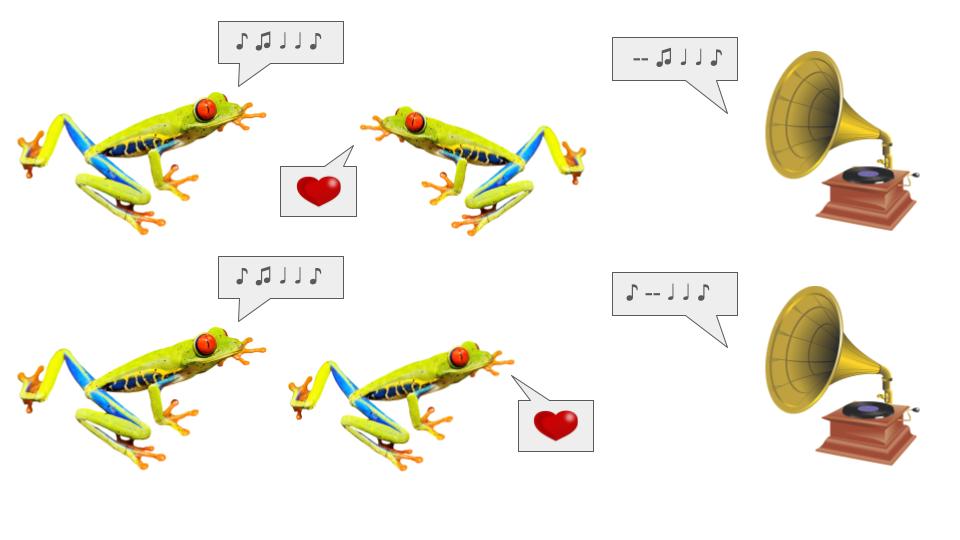
Jiang Qingyue and other researchers found that it is not just the song itself that attracts potential mates, but specifically the first note. The study operated by first creating five sounds for female Anui tree frogs (Rhacophorus zhoukaiyae) to hear: the original song of a male, the original with the first note replaced by white noise, the original with the second note replaced by white noise, the original with the fifth note replaced by white noise, and the original with the second note replaced by silence. The female frogs were roomed in darkness while two of the sounds played for each trial. If the frog moved within 10 cm of one of the sounds within 20 minutes, it was determined that the frog chose that sound.
Additionally, the study conducted an acoustic analysis of each stimulus for the female frog. They found that the only significant difference among the five stimuli was the one between the four sounds with the first note and the one without. This finding implies that the first note is unique from the rest of the notes in each frog’s song. This is how we know the first note of the song must be important in some way!
The question is, what is the function of that first note? The study’s results also showed that females preferred the original song to the one where the first note was replaced by white noise, but when the second note was replaced or silent, and had no preference when the fifth note was replaced. Since the first note is the only one acoustically unique from the others, this suggests that the first note of the male tree frog’s song is what’s necessary to attract a female frog.
One reason why the first note may be so important to frogs is because frogs are usually in very noisy environments among many rival calls. Having a unique first note from the later notes of a frog’s rival calls may help it to stand out and draw attention to itself. Additionally, the study outlines something called the precedence effect, where overlapping sounds appear to be coming from the source of the original sound. This effect would clearly negatively affect frogs who begin their calls after a rival, as it would sound like their call was coming from the rival. Thus having a unique first note allows a frog’s call to stand out from overlapping calls and therefore diminish the precedence effect.
While the primary finding of the study was the importance and uniqueness of the first note of the frogs’ songs, the study produces another interesting result about the second note. Female frogs actually prefer the two stimuli where the second note is removed to the original song. The study proposes something called the “backward auditory masking effect” as a potential explanation. Basically, it is an effect where the presence of some sound after another sound somewhat masks the first sound. In this case, the second note somewhat masks the first note. Since the first note is necessary for female attraction and communication, it would make sense that they prefer the song where the first note is more clear. This still leaves the question: why do frogs have the second note if it drives potential mates away? While the answer is still unclear, the researchers speculate that biological constraints of the tree frogs may not allow them to only produce one unique note then stop. It is possible that they produce the first note and are unable to immediately stop the larynx vibration, producing more notes.
The study reveals new and interesting things about these tree frogs, but also opens up new questions. While it may show how tree frogs are able to attract mates, the lack of knowledge about the song’s second note leaves room for future research to explore. This just goes to show as we learn and uncover more about animals, even more areas are opened to explore about our world!
References
1. Qingyue, J, Ruolei, S, Zhiyue, W, Jinjin, S, Ke, F, 2024 The first two functionally antagonistic call notes influence female choice in the Anhhui tree frog. Behavioral Ecology and Sociobiology 78, 1-13.
