
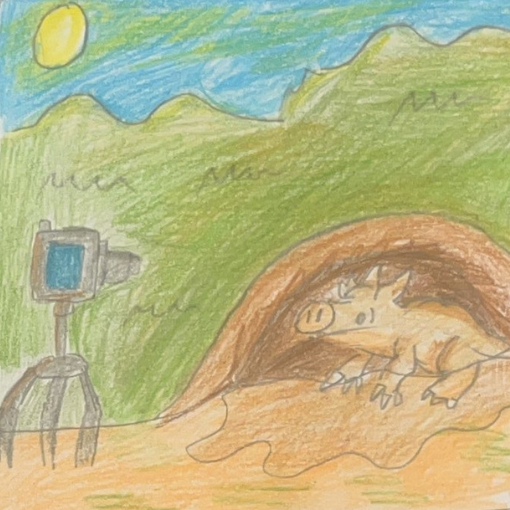
When it comes to the animal kingdom, there’s not much else like aardvarks. They have many unique things about them, but one particularly interesting thing is that they are excellent burrowers – their claws are great for making homes in the ground. However unlike other burrowing animals, such as moles, aardvarks are large, and they make huge burrows that can be around a meter high. During the day, these holes give them protection from predators, and also allow them to escape the hot sun.
However, it’s not just aardvarks that like to make these burrows their homes. At night, when they come out to grab their favorite treats-termites, other animals will take the chance to move in. After all, even though those animals can’t dig, they still like those burrows for the same reason as the aardvarks.
This is a perfect example of commensalism, which is when just the presence of another animal in an area helps out another species. Just from aardvarks building and leaving burrows they are -without realizing it – helping out other animals in their environment.
A study wanted to figure out what else will claim these homes as their own. To do this, they set up three cameras in front of one burrow. These cameras would take a picture whenever an animal walked by, allowing researchers to record when an animal was leaving or entering a burrow. Researchers recorded the animals that showed up at this burrow over the course of 44 days.
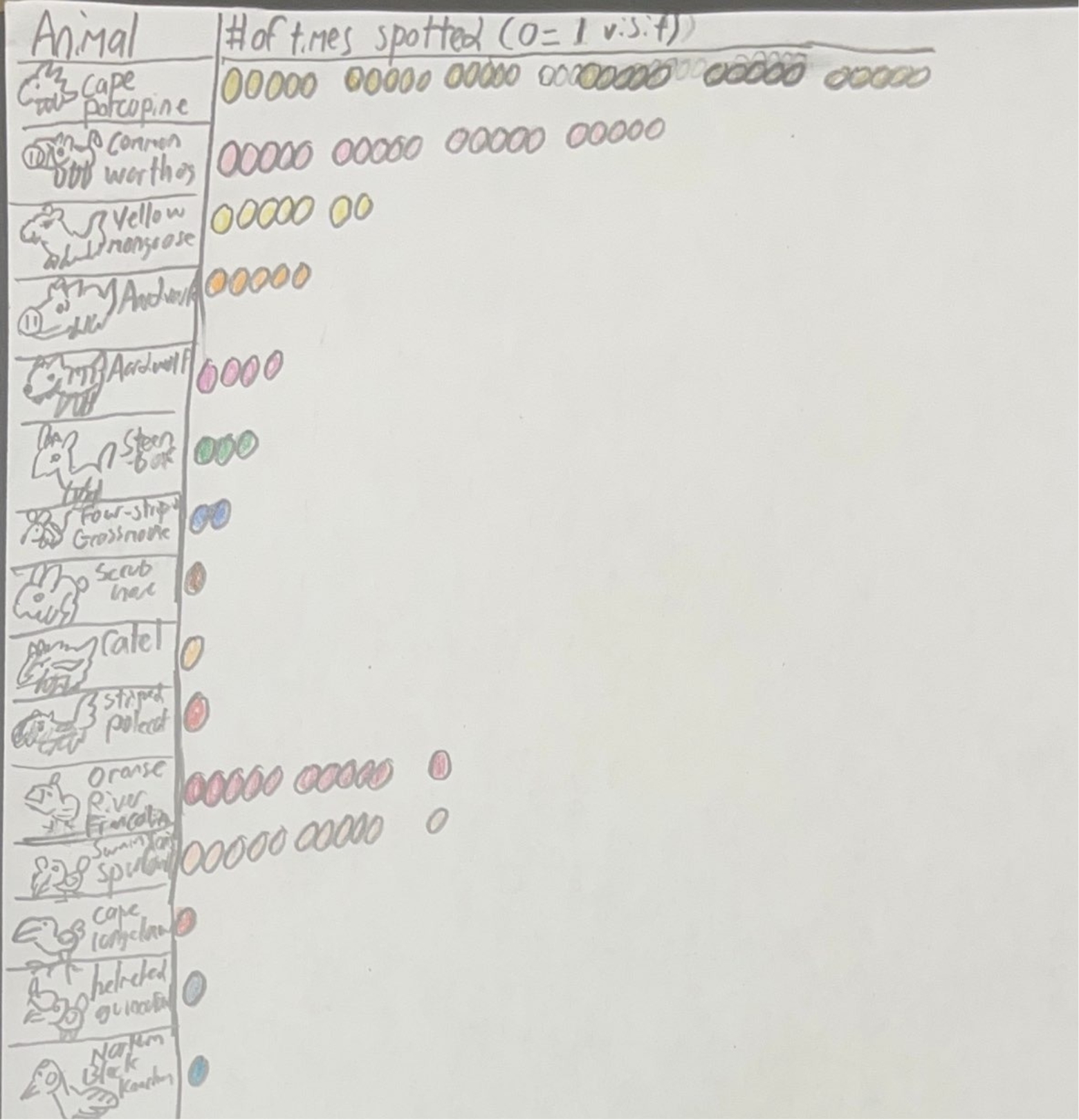
Animal Chart By Harrison Solomon liscened under CC BY-NC-ND 4.0
So who did stop by? Well, interestingly, the animal that showed up the most was not in fact an aardvark – it was the cape porcupine! They were seen entering and exiting the burrow at least once a day for 30 days. Next were smaller rodents of an undetermined species, who can easily be inside the huge burrows at the same time as another animal. Warthogs showed up twice as much as Aardvarks, and even mongooses beat out the actual makers of the burrow. In fact – Aardvarks were only seen going into or leaving the burrow on 5 days of the study!
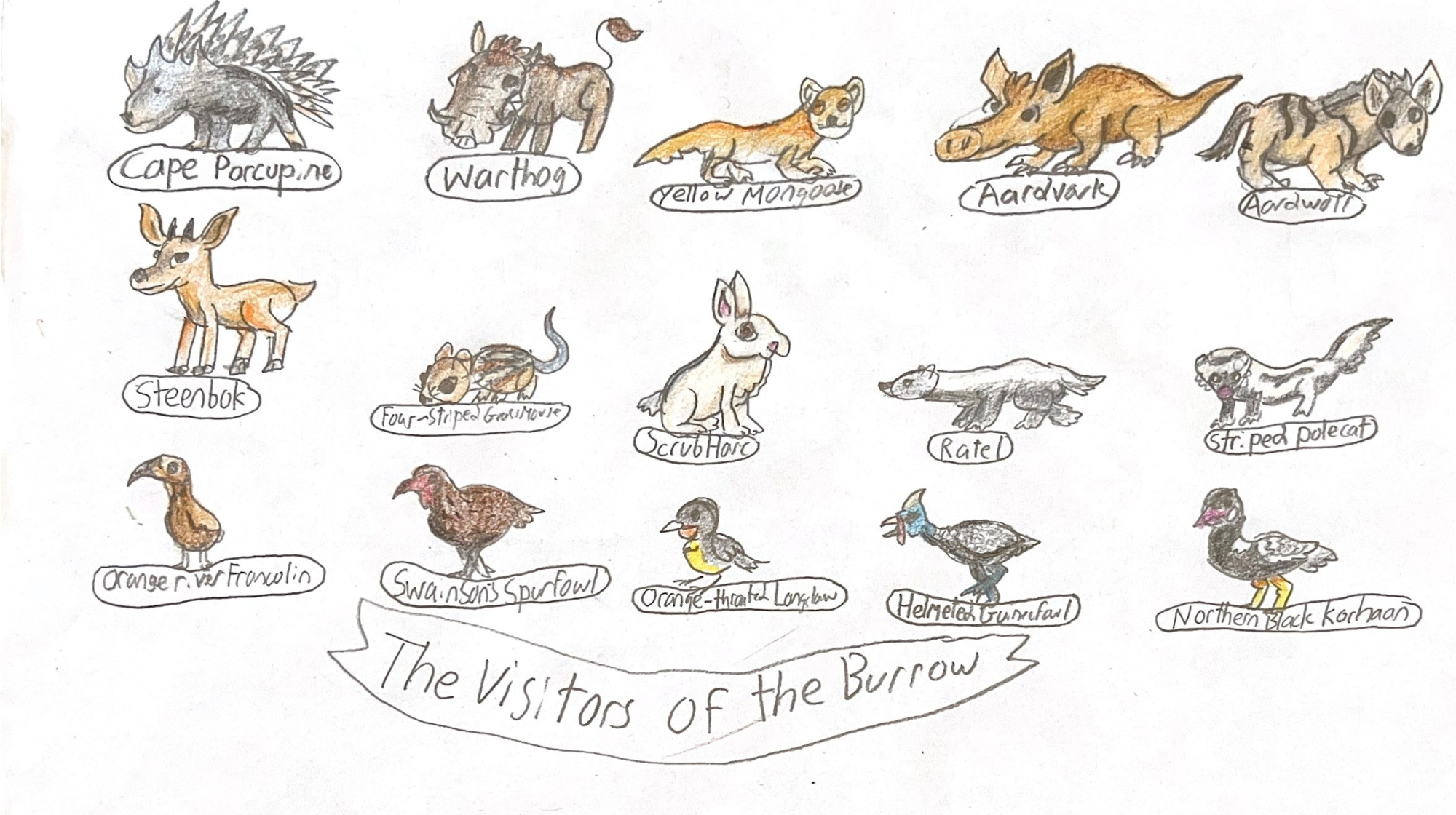
Animal Chart By Harrison Solomon liscened under CC BY-NC-ND 4.0
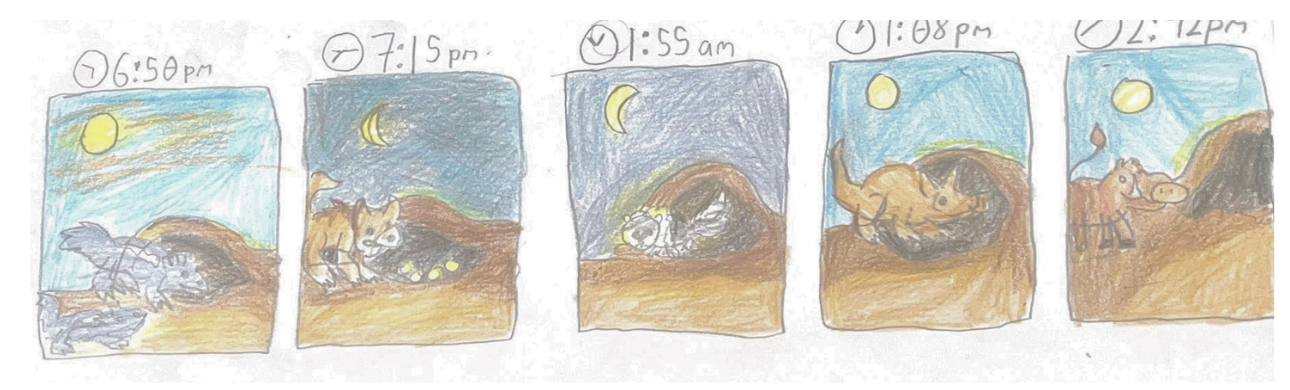
Time Comic by Harrison Solomon licensed under CC BY-NC-ND
Researchers also found that not only one animal may use the burrow at a time. In fact, it seems like the animals will share the burrow throughout the day. For instance, on the 21st day, a striped polecat, aardvark, aardwolf, warthog, and ratel were all recorded outside the burrow. First two ratel went into the burrow early in the night, which scared off an aardwolf from entering, but it still hung around the entrance for a while. The two ratel left after 25 minutes. At around 2 am, the polecat mysteriously left the burrow, meaning it was already down there. At 1pm, An aardvark entered the burrow and stayed there, and then at 2:42, a warthog joined it for a twenty minute power nap. This was an example of the type of schedule that these animals follow throughout the day, sharing the burrow. Animals likely don’t want to be in the burrow when someone else is in there, because they’re looking for rest, not a fight, but it seems that they know when to go into a burrow, and when to avoid it.
Overall, this study was an important look into how one species can change their environment in a way that helps other species survive, and also how other species share common resources. Let’s just hope that these animals don’t start appearing at your house next!
