
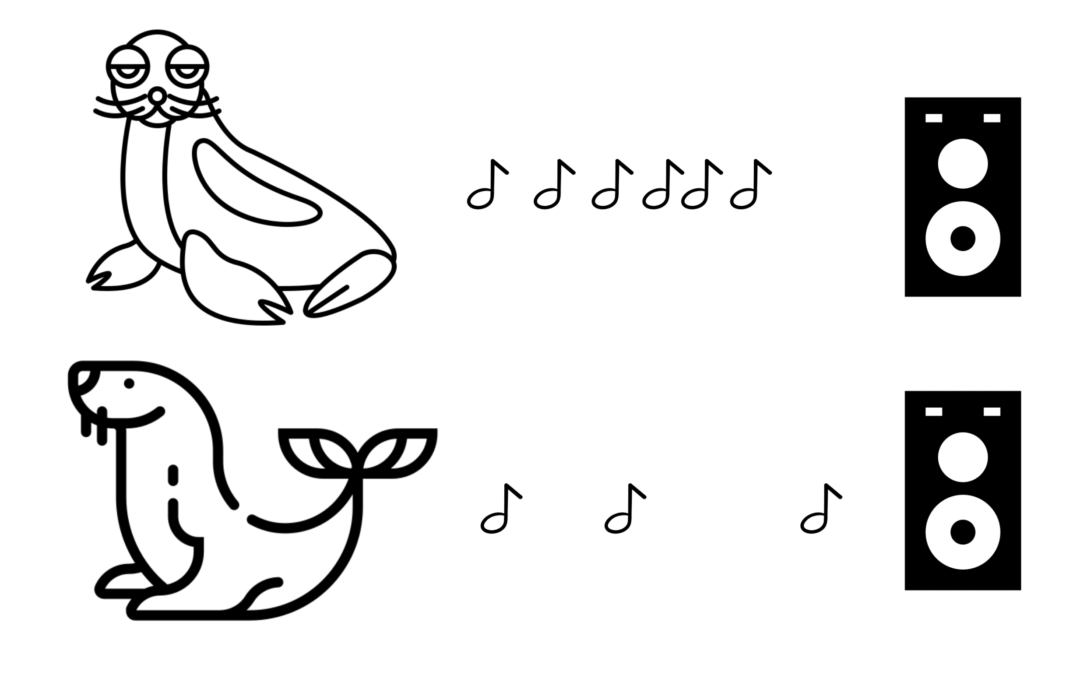
Seals are able to listen to rhythm just like you! Not many people have looked into mammals recognizing rhythm and scientists led by Laura Verga wanted to learn more. Laura and her team know that understanding rhythm patterns are important for communication from what previous people have learned. Especially since mammals have not really been looked into and since we are mammals certain parts of the findings could apply to us and how we communicate.
The scientists wanted to look at three components of being able to tell rhythm apart. The first is the speed of the calls, they looked at fast and slow speeds. The second was the length of the call, they had the call either be quick or long. The scientists wanted to test one last factor, it was the regularity of the rhythm. Laura’s team then played sounds from a speaker and recorded every time the seals would look back at the speaker. They found that the sex of the seal did not matter when the sound was being played. This is important because it allows us to understand that whether they are male or female they will react the same way.
With what Laura and her team found, we learned that there are other mammals that can determine rhythm. It is important that we know this because then we can learn about how it has evolved along with humans. It also lets us know that this is part of the way seals communicate to each other just like you and everyone you know. Laura also suggests that we look into further parts of how they communicate with each other such as how their brain allows them to understand, the value of being able to communicate compared to other animals, and more. Maybe one day you can be looking into how the seals are able to communicate with each other!
“Free Icon” by Amethyst Studio is licensed under CC 3.0
“Free Icon” by Chanut Industries is licensed under CC 3.0
“Free Icon” by BomSymbols . is licensed under “Free for commercial use (Include link to authors website)”
“Free Icon” by iconic hub is licensed under “Free for commercial use”
References
https://royalsocietypublishing.org/doi/10.1098/rsbl.2022.0316
