
Social bonds between animals of the same species benefit those individuals taking part in the long term and stable interaction. An individual chooses whom they associate with so the forming of these bonds is selective. Among the benefits that arise from social bonding are increased reproductive output, increased life span, improved infant survival rates, and a decrease in mortality rates. Because of these benefits, social bonds can determine one’s overall fitness. Female philopatry in mammals allows females to form strong and lasting social bonds with their kin, post weaning. Males’ success is limited on the number of fertile females. Males can team up in coalitions and compete among others over resources and hence move up the hierarchy. These coalitions are favorable to an individual male’s success. Reappearing coalitions of the same males are called male alliances. These alliances can occur in non-human primates, lions, lekking birds, humans, and bottlenose dolphins.
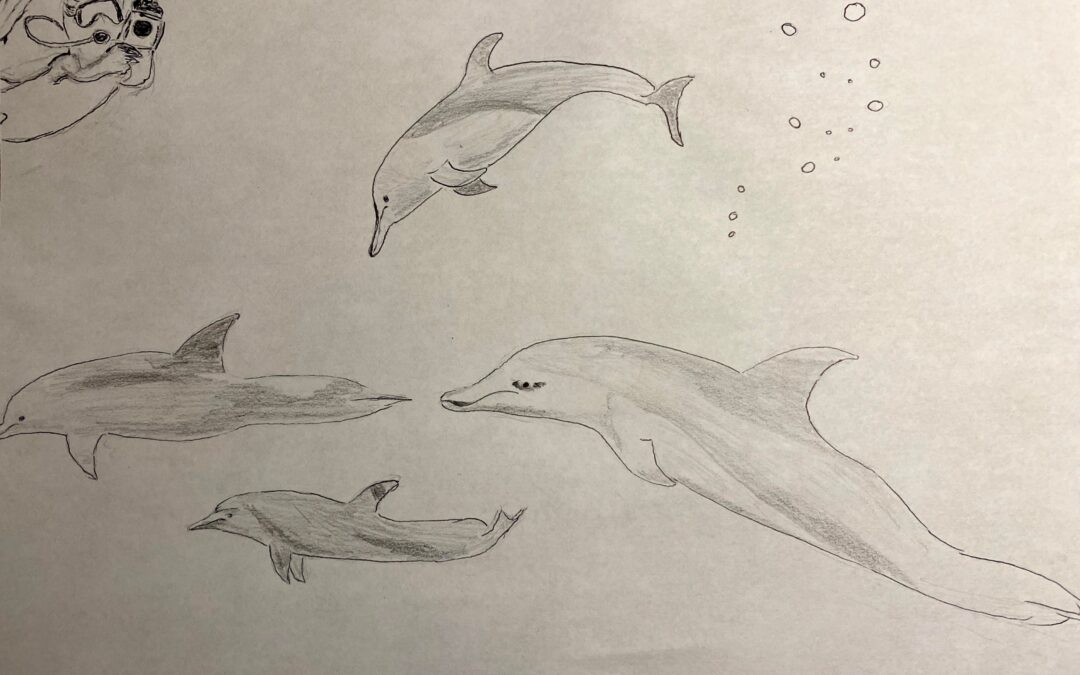
Gerber et al. studied Male Indo-Pacific bottlenose dolphins in Shark Bay, Western Australia. These individuals stand out as they exhibit multilevel alliance systems. First order alliance systems contain two to three males and are nested within second order alliances, containing 4 to 14 males. The males choose their first order alliance from their second order alliance which is therefore considered the core social unit of males in the Bay. Males do invest a significant amount of time developing social skills as calves and juveniles. In order to understand the criteria by which males form social bonds with other males, this study focuses on bottlenose dolphin alliance formation corresponding to genetic relatedness, affiliation history, and age similarity. Gerber et al. focussed primarily on males in the transition phase from adolescence to adulthood.
Between 1988 and 2015 survey data on group composition were collected in the Eastern gulf of Shark Bay in Western Australia. Individual dolphins were identified based on photographs of their dorsal fins. Gerber et al. also took association data on the 59 focal males. Two data points were collected for each dolphin’s lifespan, one at adolescence (age 8 to 14 years) and one at adulthood (age 15 to 21 years). To avoid any biases, age 21 was the maximum in this study because some dolphins live past 40 years of age. Gerber et al. used association rates as an identifier of social bonds. A male’s associates are composed of all males with whom the focal males was observed with. To then identify social bonding between these focal males and their associates, Gerber et al. used change point analysis, which is used on any series of time ordered data and will detect whether any change has occurred and if so how many and when those changes happened.
Gerber et al. found that adult social bonds were stronger than adolescent ones and more numerous. Gerber et al. also identified 3 change points. One point separating first from second order alliance partners, the second change point separating second-order alliances with males that sometimes associate, and the third change point separating those occasional males with those males that randomly associate. Once males reached adulthood Gerber et al’s. model showed that age similarity among males as well as males of whom they had already associated with in adolescence were significant predictors of patterns of association.
This study shows that “affiliation history and age similarity [predict] social bonds and thus alliance partnerships among adult male bottlenose dolphins”. Those bonds formed at a younger age tended to carry on into adulthood. Because females maintain high association rates with relatives, it makes sense that association rates in adolescents correlated with relatedness. But when the transition from adolescence to adulthood comes about, the individuals choose their alliance partners based on general competence rather than a kin-biased partner choice. Traits such as resource holding potential, cooperativeness, returning favors, and dominance rank, are valued when choosing alliance partners. A male’s reproductive success not only relies on his own competence but also that of his allied partner and how well these individuals can work together. These social bonds are present early on in life, so young dolphins are actively learning this behavior before reaching sexual maturity. Long term familiarity and age similarity (and not necessarily relatedness), friendships if you will, play a role in the formation of multilevel social bonds in Indo-Pacific bottlenose dolphins.
Gerber, Livia, et al. “Affiliation History and Age Similarity Predict Alliance Formation in Adult Male Bottlenose Dolphins.” Behavioral Ecology, vol. 31, no. 2, 2019, pp. 361–370.
