
While birds and humans have coexisted for quite some time, exploring the effect of the human gaze on Herring Gulls may be more telling of our evolving relationship with animals in the age of rapid urbanization.
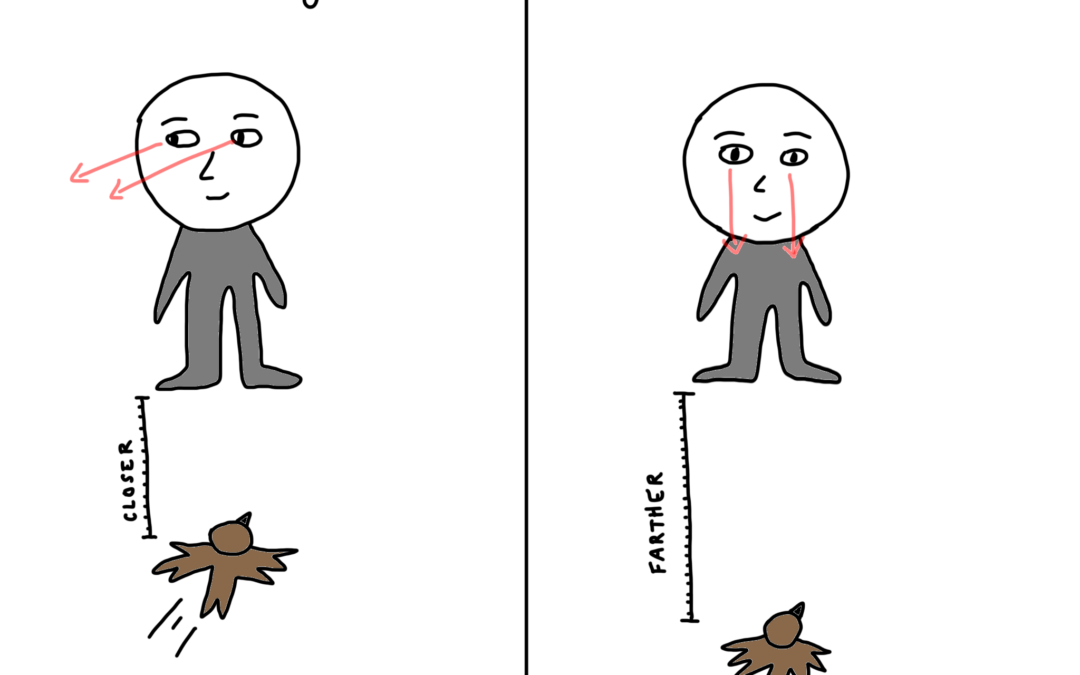
It’s no surprise that birds fly away at the sight and movement of humans, but it may not be known that the human gaze has a strong impact on when the bird will flee. The specific phenomena is identified as gaze aversion, which is when an animal exhibits a fearful response to a gaze. In a study conducted by the University of Exeter, multiple researchers looked at whether Herring Gulls’ response to human gaze differed depending on the age and habitat of the birds (1). To test their question, they focused on juvenile and adult gulls in both urban (over 10,000 people) and rural areas (under 10,000 people).
The study involved one human approaching a gull from around 20 meters away and another man recording the interaction. The experimenter would either randomly ‘look at’ or ‘look away’ from the bird while walking towards it. They were specifically looking at the flight initiation distance (FID) of each bird and the type of response they exhibited, either walking or flying away. Although the study was rather small, only conducted on 155 gulls, the data found was quite telling of the human-gull relationship.
The results were quite consistent with the proposed hypotheses. First being, gulls fled at a shorter distance (lower FID) when the experimenter was looking away from them. Secondly, rural gulls fled sooner (higher FID) than urban birds. However, the one stand-out factor was that age did not play a difference in the bird’s FID or response.
This specific result raises an interesting question that cannot be easily answered with the current information known, however, we can make inferences to explain the gull’s behavior. Specifically, with juveniles having similar responses to adults, it leads the researchers to believe that extensive experience with humans may not be necessary in developing an aversion to the human gaze. Goumas comments on this by saying, “We were interested to find that gulls pay attention to human eye direction specifically, and that this is true for juveniles as well as adults — so their aversion to human gaze isn’t a result of months or years of negative interactions with people” (2).
In addition, they also propose a possible explanation for the responses, which is that the birds could possibly be settling in habitats that reflect their personalities. For example, more daring and bold birds will move to urban areas and shyer birds will end up in more rural areas with fewer humans. There is evidence found for this explanation, but it seems that the researchers suggest doing lifetime studies on these birds so that more information can be collected to support these possible hypotheses.
Hopefully, this study will prompt a continuation of investigating wild animals’ responses to human activity. The more we learn about our impacts, whether positive or negative, the more we can help keep these species alive. It has been reported that Herring Gulls’ populations are
- Goumas M, Collins TR, Fordham L, Kelley LA, Boogert NJ. Herring gull aversion to gaze in urban and rural human settlements [Internet]. Elsevier. 2020 [cited 2020Nov10]. Available from: https://www.sciencedirect.com/science/article/pii/S000334722030244X
- Staff N. Herring Gulls Pay Attention to Human Gaze, New Study Finds [Internet]. Science News. 2020 [cited 2020Nov10]. Available from: http://www.sci-news.com/biology/herring-gulls-attention-human-gaze-08829.html
