
Imagine yourself: extremely introverted, a lone-wolf, riding solo. But then imagine you get hungry, and the bag of chips you so desperately want is way up high, on the tallest shelf in the pantry. You know that the fastest, most efficient way to reach your snack is to enlist the help of your family members. Mom knows where the ladder is. Dad can carry it up from the garage. And your little sister Susie is agile enough to climb the ladder and claim the prize for all of you to enjoy. It sounds like it’s time for a family meeting.
Octopi, similar to you in this scenario, are typically thought of as solitary creatures. However, fish are often observed to follow octopi on their hunting trips. Previously, it was unknown whether the presence of the fish was beneficial for both species, or if it was simply a strategy employed by the fish meant to exploit the efforts of the hungry octopus. This scientific experiment set out to investigate.
Scientists used 3D field-based techniques to track and visualize the activity of 13 hunting groups (120 hours of footage!), which allowed for conclusions to be drawn about interactions between species such as leadership roles and social hierarchies. As it turns out, octopi form what are known as multi-species groups. These groups are composed of various species that each offer a specific characteristic to accomplish a shared goal. In the case of hunting groups, the individual skills of each species can solidify them into roles that best divide the work.
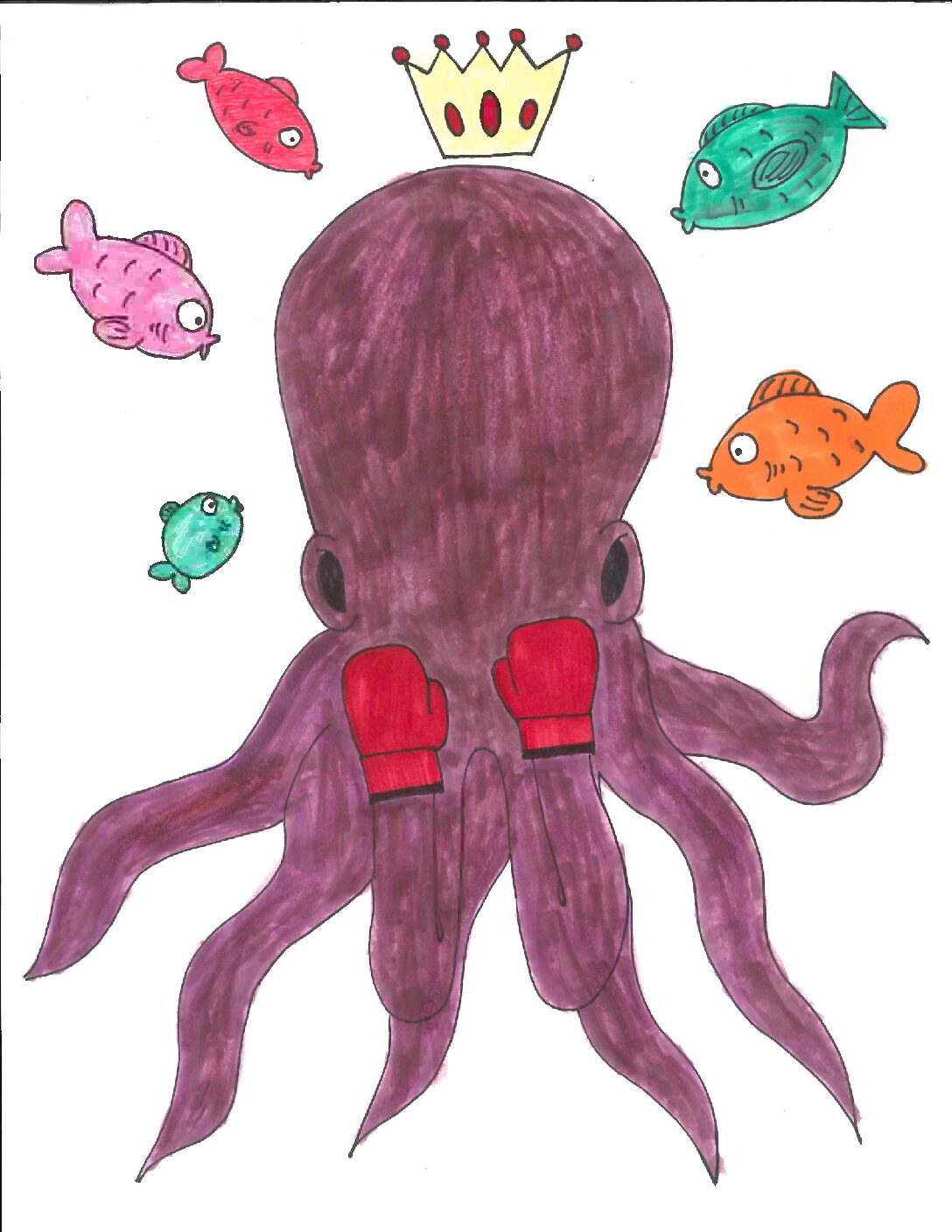
Beyond individual skills, the dominance of an individual species was also observed to play an important role in determining roles in these hunting groups. Fish may assert their dominance by darting toward another organism, an intimidation tactic that would raise their status in the group’s social hierarchy. However, octopi were consistently observed to be the most aggressive. Octopi will often punch fish, striking out with a single tentacle at other members of the hunting party to keep them in line. This aggressive behavior establishes their dominance and demonstrates their significant influence over the group.
Ultimately, it was found that leadership was generally shared among the species of these groups. Goatfishes were observed to drive group movement, the main initiators of the hunt due to their high mobility and effective location of fish. Blacktips were best at communicating when prey was near, as they are commonly known to ambush their prey by limiting movement until absolutely necessary. Other members of the group were then more attuned to their movements, as any motion from the blacktips broadcasted the presence of nearby prey. Octopi, however, were still the main leader of these groups due to their skills in flushing out prey. They are able to reach into deep crevices and cover large areas of rock or reefs, making them an extremely valuable asset to the team.
This study managed to uncover a type of intelligent collaboration across species that redefined our understanding of social behavior in animals. Despite otherwise acting as independent, non-social creatures, octopi are capable of working alongside a variety of species and experience the benefits of allied hunting. Leadership and social hierarchies are not limited to dynamics between a single species, but can be witnessed regularly between creatures that we are just beginning to understand.
Sampaio, E., Sridhar, V.H., Francisco, F.A. et al. Multidimensional social influence drives leadership and composition-dependent success in octopus–fish hunting groups. Nat Ecol Evol (2024). https://doi.org/10.1038/s41559-024-02525-2
