
The raccoon is a curious creature. From childhood, we are presented with cartoons of the sneaky raccoon skittering between trees in the forest. They are smart, sly, usually mischievous, and above all, great at finding food– no matter their circumstance. Though you probably won’t see a raccoon on its hind legs with a burlap sack running out of a bakery, some other aspects of this cartoonish characterization are very accurate to many of the animal’s behaviors! As human civilization has erected towns and cities in nearly all corners of North America, the raccoon population has tagged along in our innovations. From the flatlands of central Ohio to the sprawling city of New York, raccoons have continued to thrive, not only coexisting with humans but using our innovations to their advantage– another image that may come to mind when thinking of raccoons is the night-crawling garbage can forager. Being able to open up a human’s garbage can is no ordinary task for a wild mammal, so what makes raccoons so different from, say a deer? A squirrel? Maybe a cat? In the Summers of 2019-2021, two Canadian researchers, Louis Lazure and Robert B. Weladji set out to find out exactly what behavioral traits make raccoons the problem solvers that they are. They came across some compelling results.
To begin collecting data on raccoon behavior, the researchers set up two sets of “puzzles” with bits of food inside within parks in Montreal, Canada as well as parks in neighboring areas to the east and west of the city, one pair of puzzles for areas with high human activity and one for areas with low human activity. One of the two puzzles named the “Tube” puzzle consisted of two plastic tubes with holes cut out from their ends. The puzzle requires a raccoon to slide the tubes in proper alignment, with one sliding over the other to open a hole that holds various food items inside, such as cat food, sardines, and a marshmallow. The other puzzle, the “Box” puzzle, was made from steel mesh and required a raccoon to slide a latch on a door and then pull the door to access the same foods presented in the Tube puzzle. To capture the raccoon activity on video, the researchers set up motion-sensing night-vision cameras at each puzzle site.
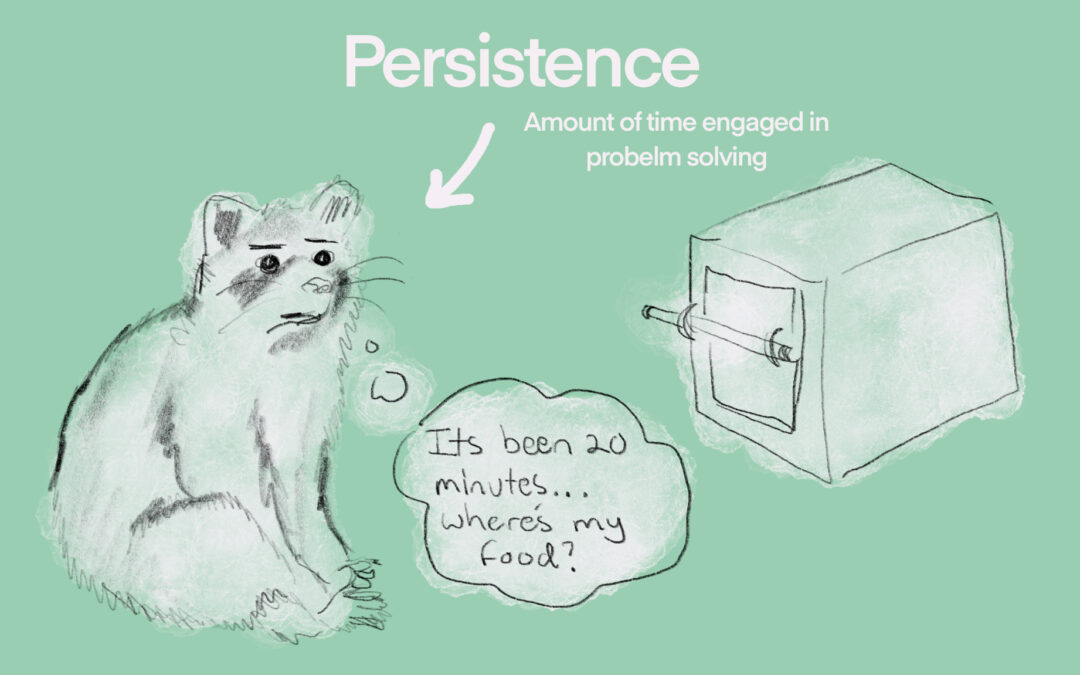
At the end of the three Summers, the researchers collected the cameras and puzzles to analyze the data. Of the 199 total trials, they found that the overall success rate of raccoons solving the puzzles was 28%, with each attempt at solving the puzzle taking from about 60-95 seconds. Of these successes, three of the raccoons took unconventional approaches to getting their grub. Two of the three were smaller than the average raccoon and reached through the side of the mesh to solve the puzzle, and one of them toppled the entire puzzle over, knocking the puzzle open! The researchers found that the success rate for raccoons trying the Tube puzzle was 4.3 times higher than that of the Box puzzle, a behavior that they had predicted before running the experiment. The two primary behaviors that the researchers were looking for were exploratory diversity and persistence. Exploratory diversity describes the variety of actions used by a raccoon during its exploration of the puzzles, whereas persistence measures the amount of time in which raccoons engage in problem-solving with the puzzles. The video recordings were extremely valuable in determining if exploratory diversity or persistence were behaviors that resulted in success at the puzzles. Ultimately, they found that high exploratory diversity, or methods of engaging with the puzzle, was often a strong predictor of success, whereas raccoons that showed strong persistence didn’t have a higher success rate. The differences in behavior between raccoons will vary due to natural biological differences, as will all species on Earth, however, there are a few key differences that are important to remember. Many of these raccoons may have prior experiences with manmade mechanisms, such as doors, latches, and even scents of manmade food. In this study, there is even mention of urban populations of raccoons performing much better than rural populations of raccoons at cognitive tasks, such as the puzzle that was given to them.
So what do these results mean for raccoons and humans? Having a greater understanding of raccoon cognition, or understanding, enables wildlife managers to have stronger knowledge of their capabilities, especially with anthropogenic (originating from humans) resources. Compared to primates like you and me, carnivores aren’t as represented in cognitive studies, meaning this study could be a very important piece in understanding carnivore-human conflicts, mitigating those conflicts, and reducing misplacement and lethal removal processes. Studies such as these are essential for understanding the relationship between a habitat, its inhabitants, and the humans that more often than not, regulate the area. In continuing to study animal behavior topics like these, we can pave the way for sustainable and less intrusive ecological management methods for many more generations of species– including raccoons.
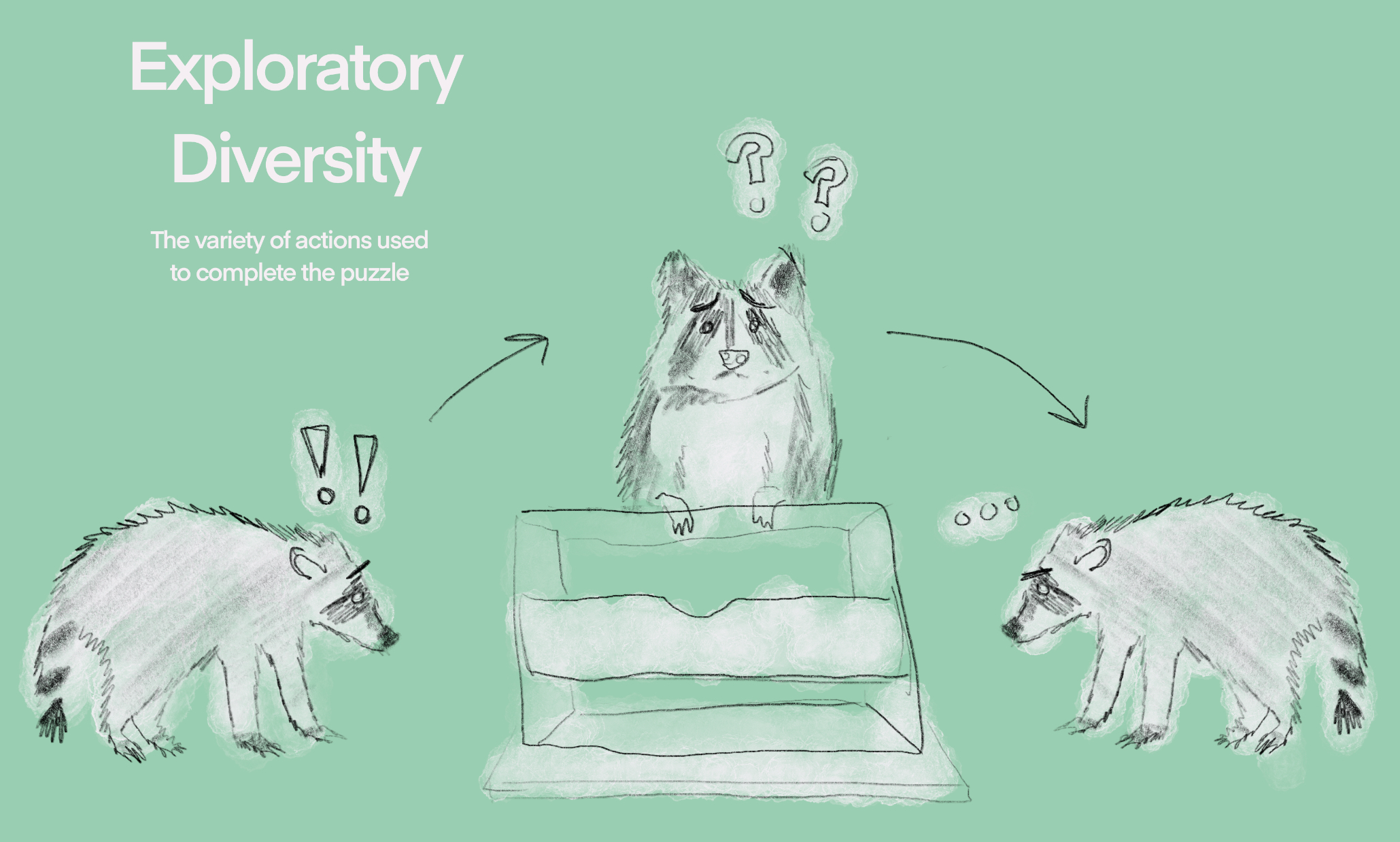
Raccoon Exploratory Diversity © 2024 by Oliver Peterson is licensed under CC BY-SA 4.0
Lazure, L., & Weladji, R. B. (2024, July 14). Problem-solving ability in wild raccoons, Procyon lotor, in relation to external factors and individual traits. Animal Behaviour. https://www.sciencedirect.com/science/article/pii/S0003347224001787
