
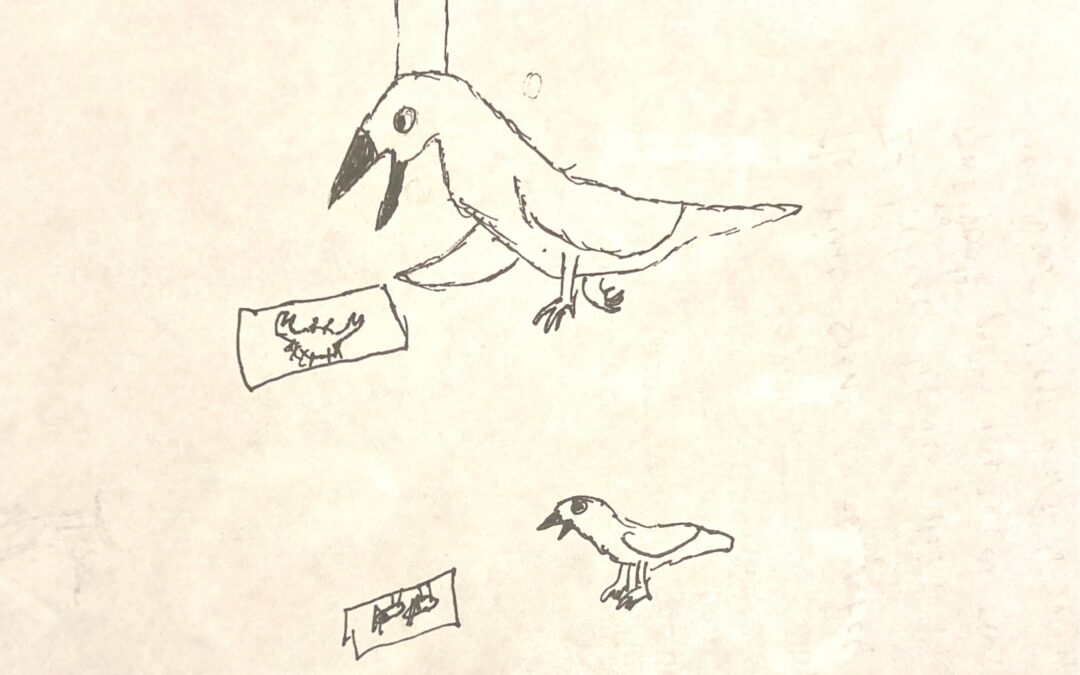
When you want a snack, there are a lot of options, though what you go for is often influenced by what’s available. Peeling a banana or having a yogurt doesn’t take much work, but the complexities of making a burger probably isn’t something you have the skills to navigate. Your parents, on the other hand, will probably enjoy a more complex meal- a steak, perhaps, or eggplant parmesan. You have that in common with crows!
A team of researchers led by Dr. Sarah Feagre decided to investigate how crows of different ages select food sources. Radio telemetry is basically GPS tracking for scientists. By attaching a tag to an organism, in this case a crow, researchers can follow their movements around an ecosystem. And that’s what Dr. Feagre and her team did for these crows.
Just as different restaurants serve different foods, so too do different areas of Rota Island, where these crows live, have different food options. By looking at where on the island the crows went, Dr. Feagre was able to figure out what foods they looked at.
Insects were a general favorite of the crows, regardless of age. Sort of like an apple- no matter who you are, you’re allowed to enjoy it. Lizards, a more complex meal, were typically eaten by adults, but some enterprising youngsters had a lizard or two for their supper. The real difference, however, was crabs. Crabs are difficult for a bird to access. They have a shell, which makes any attempt to eat them a struggle. Older crows, however, know how to extract them from their shells and enjoy the delicious food. Dr. Feagre and her team attributed this to the older crows having learned this skill over time, both through practice and observation of other crows.
Meal preparation is no joke- it takes time to learn new recipes, to get experience cooking, learn how to handle your ingredients. The life of the crow is not different- as they grow older, they tackle new foods, new prey types, and learn how to handle even the most complex of meals- the crab.
Equally important to remember, however, is that every crow had to work their way up. There’s no switch- the older crows need to practice. Learning to gather food yourself is crucial to the life of these crows, just as we learn to feed ourselves as we gain experience. So next time you’re frustrated about cooking, about the food you have available, take a leaf out of the book of the crow. Work your way up- see what you can try, maybe enjoy a new food that you normally avoid. Crows learn by trying and doing, and so do we.
Works cited in this paper: Faegre SK, Nietmann L, Hannon P, Ha JC, Ha RR. 2020 Age-related differences in diet and foraging behavior of the critically endangered Mariana Crow (Corvus kubaryi), with notes on the predation of Coenobita hermit crabs. J Ornithol161, 149–158. (doi:10.1007/s10336-019-01705-3)
